
Guides
What Is Looksmaxing? An Honest Guide to AI Glow-Ups
What is looksmaxing, and does it actually work? An honest guide to the PSL scale, AI glow-ups, and what you can realistically change about your looks.
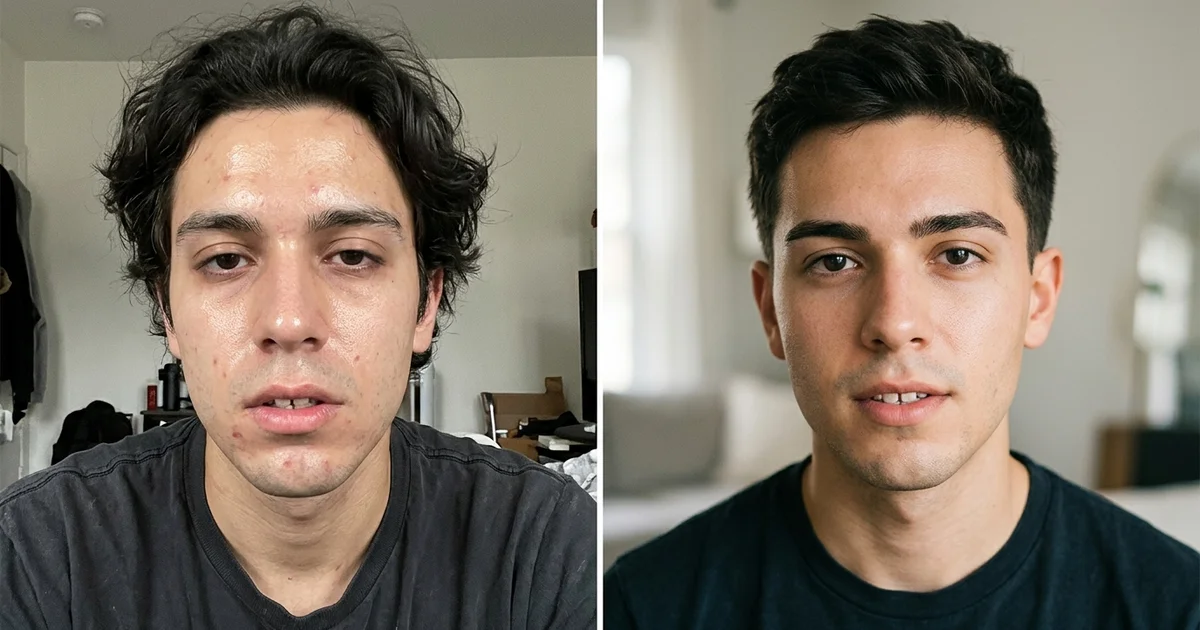
Looksmaxing gets talked about like a cheat code and like a mental-health crisis, often in the same thread. The honest version is more boring: looksmaxing is the practice of maximizing your appearance through grooming, skincare, fitness, and style — self-care with a scoreboard bolted on. Some of that scoreboard is useful, some of it is nonsense, and a lot of the "before and after" images you see are AI doing something your real face can't.
Short version up front: the grounded parts of looksmaxing — skin, hair, light, fitness — genuinely change how you look and photograph. An AI glow-up is good for one specific thing: showing you a believable, still-you preview of that before you commit to it. It is not a way to get a new face, and any tool that hands you one is selling a fantasy.
We host a looksmaxing AI tool, so instead of theorizing, this is what we've learned about where the AI preview helps and where it quietly lies.
What looksmaxing actually means (softmaxing, hardmaxing, and the PSL scale)
Looksmaxing (you'll also see it written looksmaxxing, with two x's) is the practice of maximizing your appearance on purpose rather than leaving it to chance. Strip away the forum vocabulary and it's the stuff a good barber, a dermatologist, and a decent tailor have recommended for a century.
The community splits it into two lanes:
- Softmaxing — reversible, low-risk, and where almost all the real gains live: skincare, a haircut that fits your face, groomed brows, fitness, posture, sleep, wardrobe, and learning to shoot yourself in good light.
- Hardmaxing — permanent and medical: orthodontics, cosmetic surgery, and the DIY fringe that should come with a warning label.
You'll also run into the PSL scale, a 1–10 attractiveness rating borrowed from the "PSL" forums. Treat it as internet folklore, not measurement. There's no validated instrument behind a stranger scoring your jaw out of ten, and the habit of chasing a number is exactly where looksmaxing tips from self-improvement into self-scrutiny.
Here's the part the hype skips: the boring lane is the effective lane. Cleveland Clinic's write-up on the trend lands in the same place — grooming, fitness, and skincare help; the extreme methods don't. The disagreement isn't really about whether looksmaxing "works." It's about which version you're doing.
What an AI glow-up can genuinely do
An AI glow-up is genuinely useful for one thing: previewing the softmaxing basics — skin, hair, light — on your own face before you commit. Not as a face generator, but as a preview.
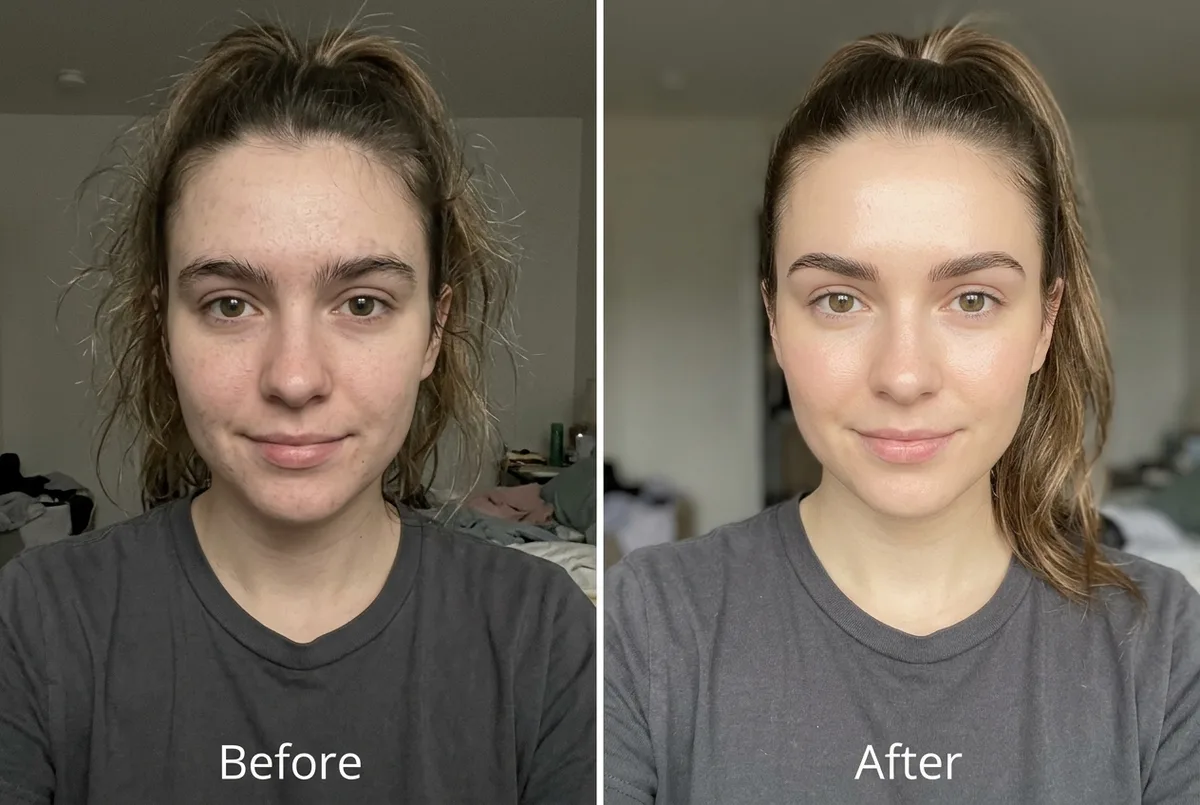
Upload one clear selfie and a good glow-up model shows you a version of yourself with the softmaxing basics already applied. Three things it does well:
It previews grooming you haven't done yet
Clearer skin, a tidier hairstyle, groomed brows, a better shave. These are all things you could genuinely achieve in a few weeks, and seeing them on your own face is more motivating than reading "get a haircut" for the hundredth time.
It fixes the thing most selfies get wrong: light
Half of a bad selfie is flat overhead lighting and a phone held too close. A glow-up preview re-lights your face the way a window or a photographer would — and that alone accounts for a surprising amount of the "wait, that's me?" reaction. Nothing about your face changed; the light did.
It keeps you looking like you
The whole point of the version we built is still clearly you. Same bone structure, same nose, same eyes — only the changeable layer moves. When we tuned the tool, the hardest and most important constraint was resisting the model's urge to "improve" your face into a generic attractive stranger. A preview you don't recognize is worthless.
What an AI glow-up can't do (and who oversells it)
An AI glow-up can't touch the things a real face is stuck with — the bones you were born with, your height, your age — and honest tools admit it.
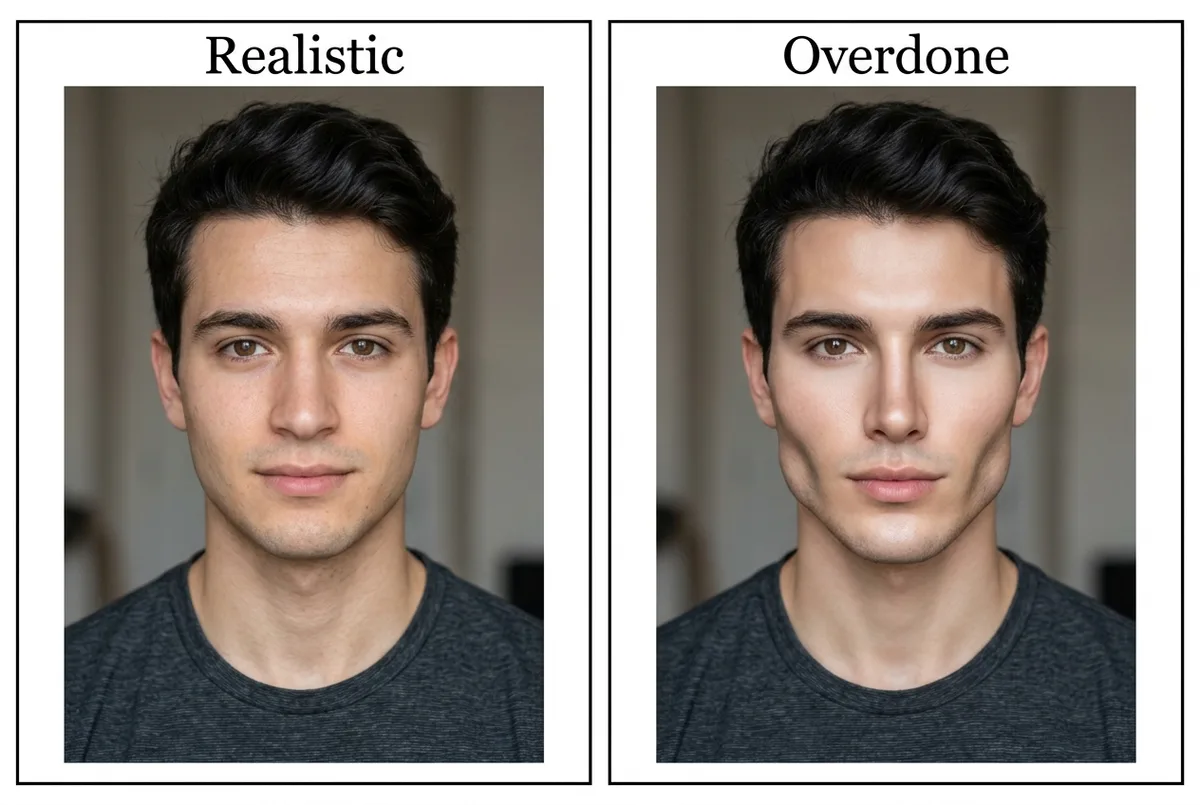
AI can't change your bone structure — and neither can you, safely. The image on the right above is what "overdone" looks like: a carved jaw, hollow cheeks, a different nose. It's a good-looking render of a person who isn't you. Some looksmax apps hand you that by default and call it your potential. It isn't a preview of anything you can become without surgery.
A preview is not a result. The glow-up shows the destination, not the road. The clear skin comes from months of a real routine, not from the render. Confusing the two is how people end up disappointed in a mirror that was never going to match a generated image.
The rating culture has a real downside. This is the part that matters most. Clinicians and researchers increasingly tie the obsessive end of looksmaxing to body dysmorphia, anxiety, and eating-disorder patterns — especially in teen boys and young men, per reporting from PBS and academic writers at The Conversation. The DIY fringe is worse: "bone-smashing," hitting your own face to reshape it, has caused fractures and, in one documented case, blindness. There is no version of that worth trying.
So the line we draw with our own tool is deliberate: a glow-up is a one-off nudge toward habits you already know help. It is not a scoreboard, and if you're refreshing it to re-rate yourself, close the tab.
From glow-up preview to a plan
A preview is only useful if it turns into something you do. The translation is straightforward, because everything an honest glow-up shows maps to a real, reversible action:
- Skin → a basic routine (cleanser, sunscreen, and a treatment for whatever your specific issue is). If it's persistent, that's a dermatologist visit, not a serum from an ad.
- Hair → the single highest-leverage change for most people. Bring the preview to a barber as a reference.
- Light and photos → shoot near a window, camera at eye level, slightly farther back. This costs nothing and changes every photo you take.
- The slow lane → sleep, training, and body composition. No render accelerates these; they're just time.
If you want a baseline before you start, an AI face rating can point at what's already working and what a routine could reasonably move — just hold it loosely, as a starting read rather than a verdict. The goal isn't a number going up. It's showing up in your own photos looking like a well-rested, well-groomed version of yourself.
Try your own glow-up
If you want to see the honest kind — a believable, still-you preview rather than a stranger's face — upload one clear, evenly lit selfie:
- Open the looksmaxing AI generator and drop in your photo. New accounts get free credits, so you can run a few takes.
- Judge the first result, not the fifth. If it doesn't look like you, that's the tool overreaching, and it's the wrong tool.
- For a specific change instead of a full glow-up — a new hairstyle, a background, a wardrobe swap — the text-to-image and editing tools let you preview one thing at a time.
Use it the way you'd use a mirror in good light: as feedback, then get on with the actual work.
References
- Looksmaxxing: What It Is and Why It Can Be Harmful — Cleveland Clinic — a clinician's breakdown of the healthy grooming lane versus the harmful extremes
- Looksmaxxing isn't just a TikTok trend — it often reflects severe body image issues in teen boys and young men — The Conversation — academic perspective on the mental-health risks
- Looksmaxxing may point to deeper body image issues in young men, mental health expert says — PBS News — expert commentary on when the trend crosses into disorder
Frequently Asked Questions
Related reading
Model Reviews
Nano Banana Pro vs Nano Banana 2: Which Should You Use?
Nano Banana Pro vs Nano Banana 2 compared on 4K, speed, text and price — plus how to run Nano Banana 2 free and watermark-free, with no API key.

Model Reviews
Seedream 5.0 Pro Review: 5 Real Tests of ByteDance's New Model
Seedream 5.0 Pro tested on real prompts: dense infographics, bilingual posters, photoreal portraits, plus a shootout vs Nano Banana 2 and GPT Image 2.